
State Government Relations
Lawmakers meet to plan for 2027 session
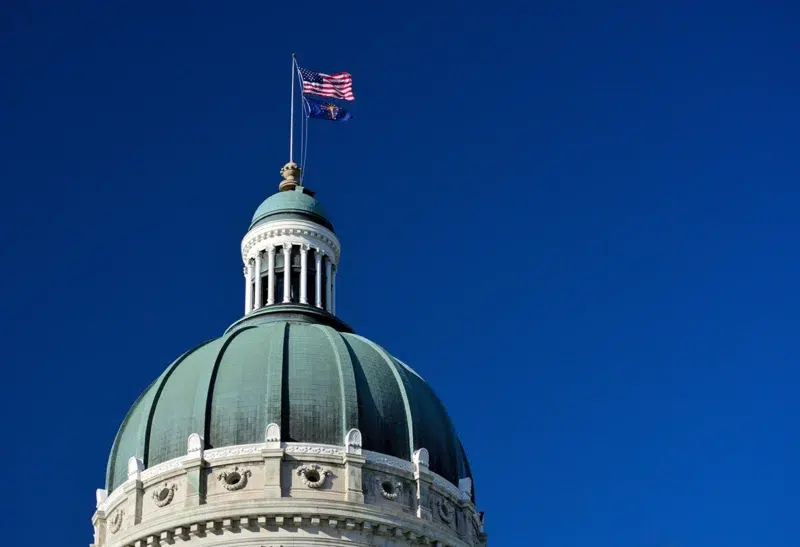
Indiana lawmakers convened for Organization Day on Tuesday, Nov. 17, to swear in newly elected members, adopt chamber rules and formally begin preparations for the 2027 legislative session. Following significant membership turnover and new leadership in both chambers, the session is set to begin later than any Indiana legislative session in more than a decade, with the House returning Jan. 11 and the Senate Jan. 19. House Speaker Ben Smaltz recently announced House Republican leadership and committee assignments, including Rep. Jake Teshka’s appointment as House Republican Caucus Chair and Rep. Ethan Lawson’s selection to lead the newly combined House Insurance & Financial Institutions Committee.
Federal Government Relations
House Democrats nominate Jeffries as speaker
House Democrats overwhelmingly voted to nominate House Minority Leader Hakeem Jeffries, D-N.Y., as their choice for speaker in the next Congress. Senate Democrats are expected to nominate their choice for Senate majority leader in December.
Gould: OCC will ‘accelerate’ regulatory reforms
Comptroller Jonathan Gould said the Office of the Comptroller of the Currency plans to accelerate its work and advance rulemaking “so that their benefits will endure beyond our time at the agency.”
Sen. Britt introduces bill to create national anti-fraud office
Sen. Katie Britt, R-Ala., introduced legislation to create a new executive office to coordinate the nation’s fight against fraud and scams.
Supreme Court declines to consider crypto firm lawsuit for master account access
The U.S. Supreme Court declined to hear the appeal of a cryptocurrency firm that sued the Federal Reserve after the central bank denied it a master account.
House passes bills on retirement plans, VA mortgage fees
The House passed an industry-backed bill to allow 403(b) retirement plans to invest in bank collective investment trusts. Lawmakers also passed an unrelated bill to fund additional healthcare, education and job measures for veterans by raising VA mortgage costs.
FOMC members expect inflation to remain elevated in the near term
Participants at last month’s Federal Open Market Committee meeting said they expected inflation to remain elevated in the near term but to decline over time toward 2%, according to the meeting minutes. According to the minutes of the FOMC’s Oct. 27-28 meeting, participants said the inflation decline would reflect the waning of tariff-related price effects, a reduction in energy prices, and a moderation of the pressures associated with the AI buildout. The FOMC is slated to hold its final meeting of the year on Dec. 8-9.
FDIC proposes rule on custodial deposits
The Federal Deposit Insurance Corp. board of directors proposed a rulemaking that would implement a limited exception for custodial deposits under the brokered deposits statutory framework. The proposed rule would permit certain banks with less than $10 billion in total assets to exclude “qualifying custodial deposits” from treatment as brokered deposits, in an amount up to 20% of the bank’s total liabilities. The proposal also would define key terms, clarify how the FDIC would apply the $10 billion threshold, and implement interest rate restrictions applicable to certain banks that accept qualifying custodial deposits. Comments are due 60 days after publication in the Federal Register.
The bipartisan 21st Century ROAD to Housing Act, which took effect in July, includes an industry-advocated provision allowing community banks to hold custodial deposits and more reciprocal deposits without them being considered brokered deposits, which are subject to restrictions. The FDIC in August approved a separate interim final rule to amend the statutory framework governing reciprocal deposits that broadens the definition of “agent institution” and provides clarifications regarding the operation of the reciprocal deposits framework.
Fed announces changes to check services
The Federal Reserve announced changes to streamline its check services following a request for information issued last year.
The Fed said:
- The volume of checks processed by Federal Reserve Banks is declining, but checks remain an important payment instrument for many consumers and businesses.
- The changes were informed by public feedback and ensure that the Federal Reserve Banks continue to provide check services efficiently.
- The adjustments include optimizing check processing windows during low-volume periods, increasing fees that banks pay to process checks, and other operational updates.